


Buffer rage is real. Trying to watch a movie while the resolution drops to pixelated mush is enough to ruin the night. Most people blame their internet provider, but the real villain is usually the cheap router struggling to push a signal through three layers of drywall.
Patching this with twenty-dollar range extenders is a waste of money. They cut speeds in half and force phones to jump between different networks. Fixing the problem requires a nuclear option that floods the house with bandwidth so you never have to think about it again.
The Mesh Difference
Standard routers work like a single speaker trying to fill a stadium with sound. If you are close, it’s loud; if you are in the back, you hear nothing. A mesh system like the Orbi puts a speaker in every room, creating a seamless blanket of coverage that cheap hardware simply cannot match.
Networking gear is usually terrifying to set up because most people dread typing IP addresses into a browser just to change a password. The Orbi setup happens entirely through a phone app. Plugging the main router into the modem and scanning a QR code is really all it takes.
The app finds the satellites automatically and links them into a single, massive network in about 15 minutes. It removes the friction that keeps most people from upgrading their gear.
Speed Test And The Backhaul Effect
Paying for gigabit internet but only getting 300 Mbps over WiFi is a common frustration. With the Orbi 770, standing in the furthest corner of the house produced speeds hitting 900 Mbps. That is practically hardwired speed without the wire.
The secret is the “backhaul.” This is a dedicated lane the router uses to talk to its satellites so your data never hits traffic. You can read more about [WiFi 7 vs WiFi 6] to see why this tech matters for future gadgets.
Real World Coverage And Value
The box claims coverage up to 8,000 square feet. Testing that limit is hard, but punching through an exterior brick wall to cover a backyard patio is a real test. This system lets you stream 4K video outside without a single stutter.
It handles traffic well too. With 30 devices connected—smart bulbs, cameras, laptops—nothing slows down even when the kids are gaming. The router includes a 2.5 Gig internet port, so if fiber speeds increase in your area, the hardware is ready for it.
Investing in a dedicated mesh system feels expensive until you realize what you are actually buying. You aren’t just buying plastic towers; you are buying the end of network frustration. Check our breakdown of Is Mesh WiFi Worth It if you are still on the fence about the cost.
NetGear Orbi 770, Is It Worth The Investment
The NetGear Orbi Mesh System sits in a different bracket than the budget routers you grab off the shelf at a big box store. However, you must consider what you are actually buying. You aren’t just buying a plastic box with antennas; you are purchasing the elimination of network frustration.
Consider the value of removing annoying signal lag during a game or preventing a dropped call during a crucial meeting. This system is designed for users who require the internet to work flawlessly, everywhere, without the need to constantly monitor the hardware.
The Bottom Line
The decision comes down to your tolerance for dead zones. If a traditional router satisfies your needs, the upgrade is unnecessary. However, if total home coverage is more important to you than the cost, the answer is clear. The NETGEAR Orbi 770 is the solution that finally worked for me.
Alternative Suggestion
If you are ready to stop resetting your router every week, the Orbi is the superior fix. However, a solid runner-up worth considering is the eero Pro 7. It features 2 auto-sensing 5GbE ports, which provide better wired capacity for storage devices and high gaming output for those who wish to save money without sacrificing too much performance.
Wireless Home Networking
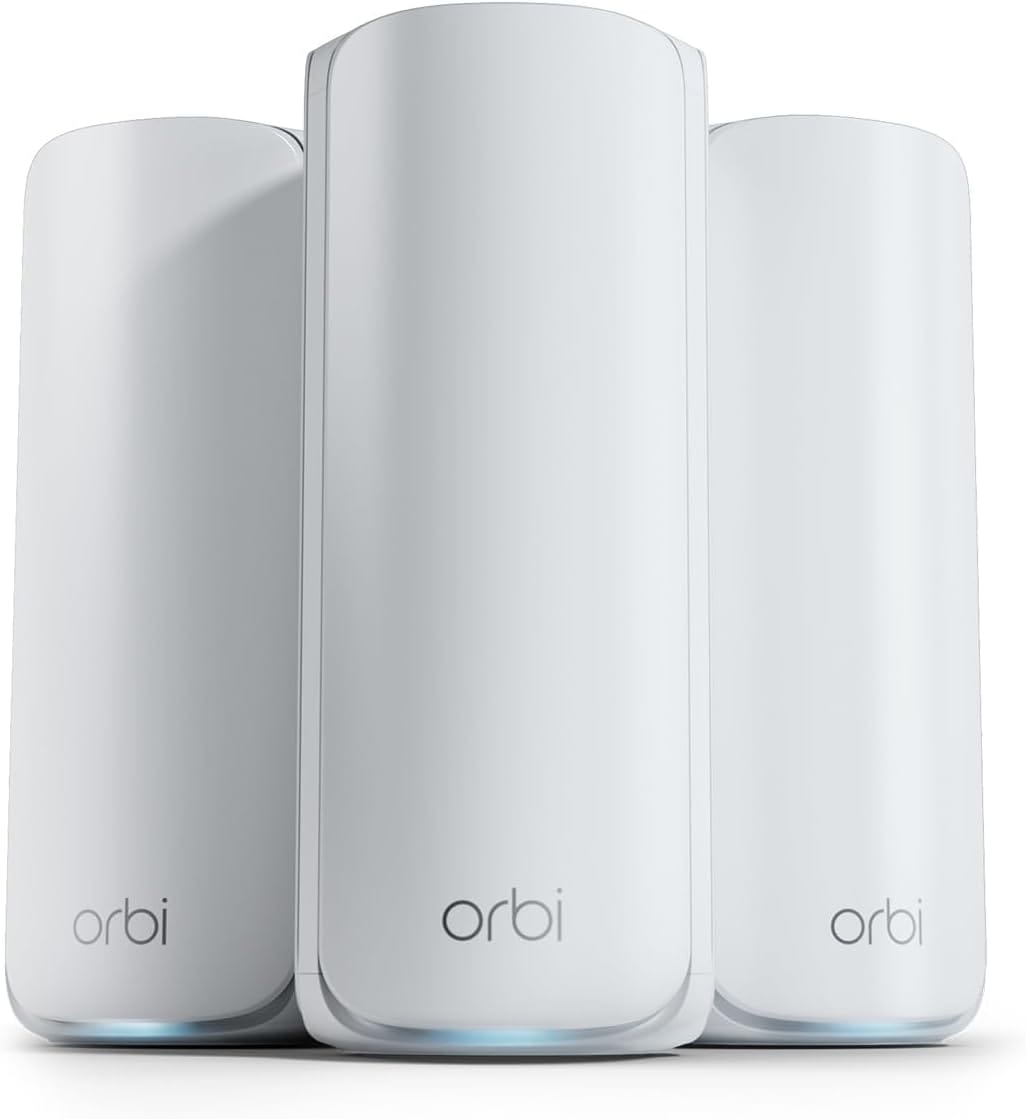
NETGEAR Orbi 770 Series Tri-Band WiFi 7
The Orbi 770 is a WiFi 7 mesh system that blasts 11Gbps speed across 8,000 square feet, handling 100 devices without slowing down. It uses a dedicated backhaul and a 2.5 Gig port to make sure every room gets full signal, finally ending the dead zone headache.


